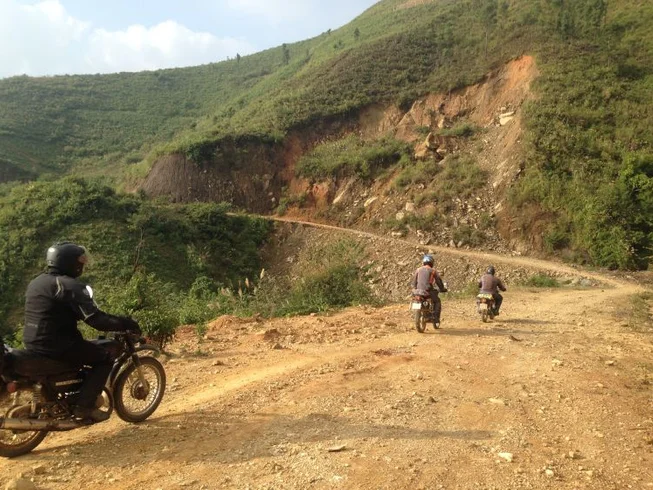
Overview
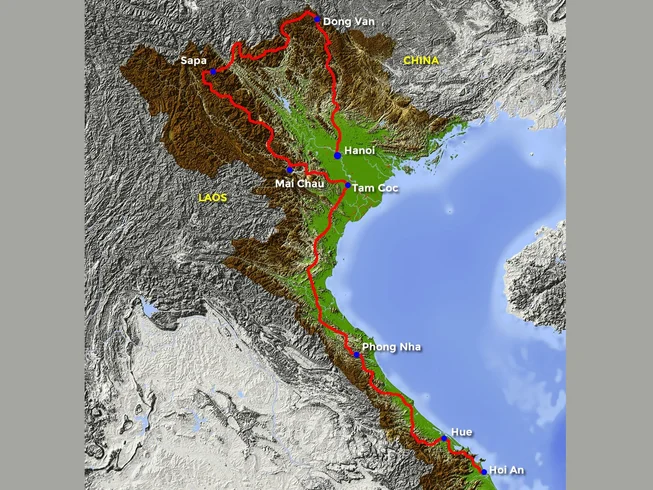
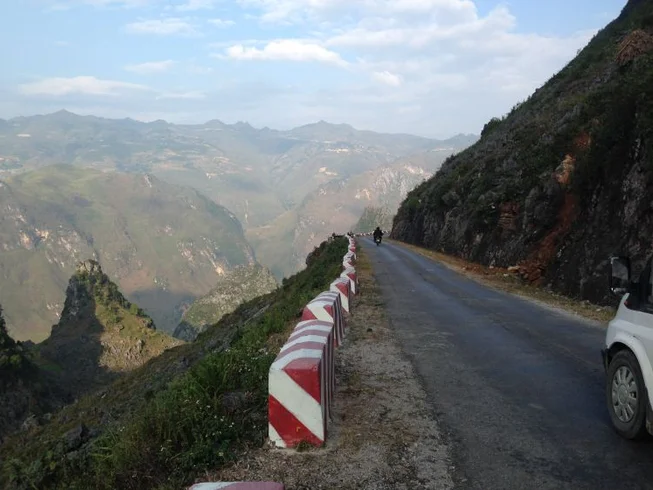
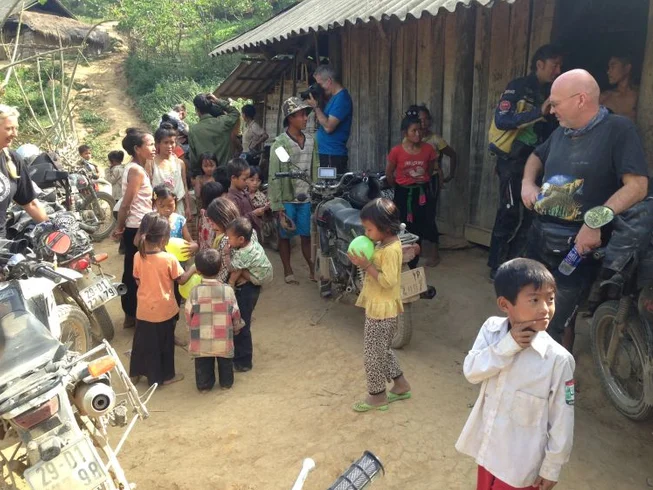
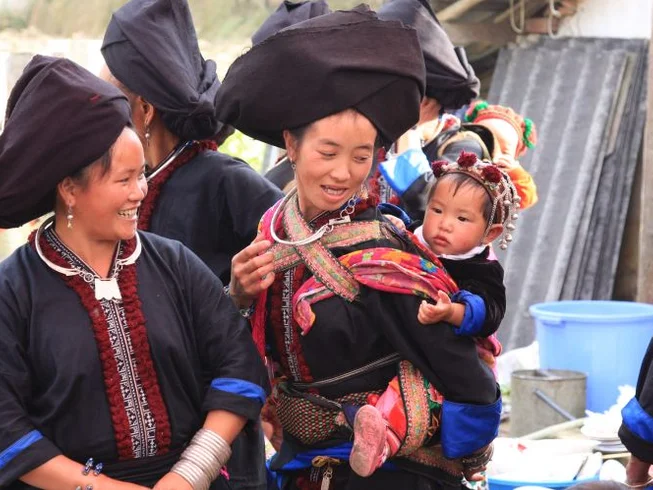
47 Lo Su street, Hoan Kiem District, Hanoi, Vietnam Through beautiful mountain roads, you visit colorful markets and see the most special tribes. You get a taste of Vietnam’s culinary diversity and explore historical sites.
Highlights
- Starts in Hoi An and ends in Hanoi
- Visit colorful markets and the most special tribes
- Explore the beauty of Vietnam
- Ride through valleys, mountains, rice terraces, and mountain villages
- Go on a half-day tour in Hoi An
- 20 nights accommodation
Itinerary
Day 1: Arrival - Hoi An
Depending on the airline, you will arrive at Da Nang Airport either in the morning or the afternoon. It is a 45-minute drive to the hotel in the center of the old town. Hoi An is a small town with traditional houses that many travelers experience as one of the most attractive and fun places in Vietnam. Situated along the river are a colorful market and traditional streets filled with historical Chinese-influenced buildings and small Chinese shrines.
Day 2: Hoi An - stay (50 kilometers / 31 miles)
Today, you will test the motorbikes and drive to My Son (30 kilometers from Hoi An). My Son was the political and religious center of the Cham people who held sway in Vietnam from the fourth to the thirteenth century. Although the war has left its mark here as well, it is still an interesting and attractive place to visit. The rest of the day, you can explore the town. You can take a boat trip across the river and visit the nearby beach. Delicious restaurants and charming cafes are in abundance in Hoi An.
Day 3: Hoi An - Hue (140 kilometers / 86 miles)
You drive northwards via the Marble Mountains to Da Nang. During the war, American ships on the coast were bombarded by caves in these mountains. Nowadays, it is a marble quarry and the surrounding villages are home to marble artists. Then you take a stunning mountain pass along the sea and drive through the Bach Ma National Park before ending in Hue. There, you will visit the ancient Hue Citadel where the Forbidden Purple City is located.
Day 4: Hue - Dong Hoi (200 kilometers / 124 miles)
You will visit the Vinh Moc tunnel complex. Where the Chi Chi tunnels in the South – near Ho Chi Minh City – mainly functioned as war routes, the Vinh Moc tunnels were shelters for village inhabitants to escape the intensive American bombings. At that time, approximately 60 families lived there, and 17 children were born there. After the guided tour, you will get back on your motorcycles and drive via the coast to Dong Hoi. Having been shattered during the Vietnam War, this riverside town has made a comeback in recent years, with its beautiful beaches, colorful markets, and addiction-worthy Vi
Day 5: Dong Hoi - Phong Nha (120 kilometers / 74 miles)
This morning, you partake in an adventurous route as you drive through part of the Ke Bang National Park. Ninety percent of this park is primary forest, meaning humans have not influenced the area and it has a high level of biodiversity. Here, you also find the most covert part of the Ho Chi Minh trail: The section which ended in the DMZ - Vietnam’s Demilitarized Zone. During the Vietnam War, this was a neutral zone between North and South Vietnam. The US Secretary of Defense at the time established a defense line here named after him, the McNamara Line. This line joined a ribbon of US bases a
Day 6: Phong Nha - Thai Hoa (310 kilometers / 192 miles)
Today is a travel day. You are already driving on the Notorious Ho Chi Minh road and you continue this road north. This legendary road was once just a trail through the jungle that the North Vietnamese troops used to supply the Vietcong in the South during the Vietnam War. You follow almost deserted roads through spectacular mountains. You will drive along the Vu Quang National Park, a remote area on the border with Laos. Several years ago, the Saola or Spindlehorn, also known as the Vu Quang ox, was spotted for the first time. It is one of the rarest animals in the world. People of the Muong
Day 7: Thai Hoa - Tam Coc (180 kilometers / 111 miles)
You continue to follow the Ho Chi Minh trail and you drive through small villages and rice fields. The road is getting slightly narrower and the region is even more sparsely populated. Tourists hardly come here. You will gain insight into the life of the countryside of Vietnam. You will drive through small villages, along rubber plantations, tea and cornfields, and past bullocks that graze and plow in the rice fields. Remarkably, there are more churches than temples in this area.
Day 8: Tam Coc - stay
Today, you will first make a rowing boat trip (1.5 hours) to enjoy the magnificent limestone mountains, natural caves, and authentic farming activities. It is a short drive to Hoa Lu, the ancient capital of North Vietnam. There are some temples built in honor of, amongst others, the first Vietnamese emperor Đinh Tiên Hoàng (924–979) (r. 968–979), following the liberation of the country from the rule of the Chinese Southern Han Dynasty.
Day 9: Tam Coc - Mai Chau (150 kilometers / 93 miles)
You continue your journey in the west direction. You drive on narrow and quiet country roads and pass a few national parks on the way to Mai Chau. The town is situated in an idyllic valley, hemmed in by hills and rice fields. The valley holds several Thai villages, characterized by traditional stilt houses. If time and weather permit, you can take an optional loop through the hills and partially unpaved tracks to visit a chopstick factory.
Day 10: Mai Chau - Nghia Lo (225 kilometers / 139 miles)
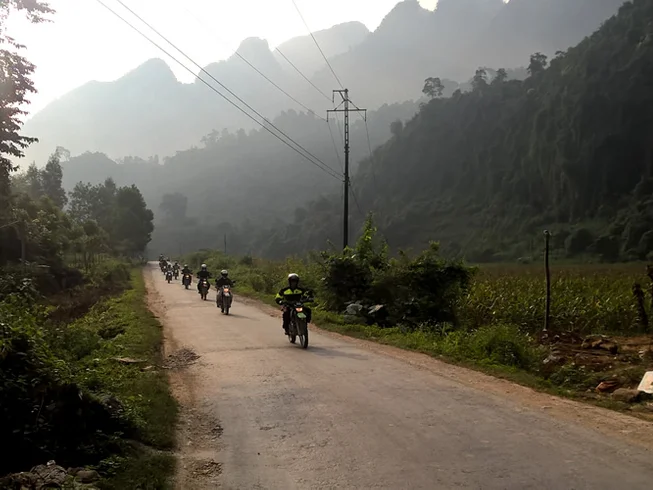
You are awoken by rural soundtracks defined by gurgling irrigation streams and birdsongs. Today, you again follow a narrow but surfaced road. It is a beautiful area and along the route, there are many small villages and tea plantations. Throughout the morning, one still comes across mostly Thai people but later in the day, one sees more and more Hmong people. You cross over the Black River on a small ferry and make your way to Nghia Lo. This is a fast-growing mountain town situated at the junction of two important roads. In town, you will come across Dao and Hmong people.
Day 11: Nghia Lo - Sa Pa (235 kilometers / 146 miles)
You ride further north. The landscape is beautiful here. On both sides of the roads, there are green rice terraces built against the mountainsides. You ride through the mountains, crossing over a few high passes. There are more Dao people in this area. 40 kilometers before Sa Pa, you will climb the highest pass of this trip. Sa Pa is the most touristy place you will visit on this trip. However, since you will avoid visiting during the weekend market, you won't encounter too many tourists. Sa Pa is situated at an altitude of 1500 meters. During the French colonization, it developed as a summer
Day 12: Sa Pa - stay
Sa Pa is a charming place to spend a day. You can walk in the valley just behind the town, rent a bicycle, or quietly explore the town and the market.
Day 13: Sa Pa - Bac Ha (190 kilometers / 118 miles)
The first 110 kilometers of the day, you ride on a fully surfaced road. Along the way, you stop in Lao Cai to take a look at the Chinese border. The Red River separates the two countries here and a railway bridge connects them again. Across the river, one can see the tall buildings of the relatively-speaking much richer China. For a short time, you follow the highway and quickly make a turn to proceed on a small country road that slaloms eastwards along the Chinese border. Your journey will be full of hilly curves, rice terraces, and river views. Bac Ha is a typical Northern Vietnamese village
Day 14: Bac Ha - Ha Giang (200 kilometers / 124 miles)
Just north of Bac Ha, you turn right onto a small road. You then ride through a spectacular area studded with jagged rocks. The people of the small Hmong villages are surprised to see you as they hardly see any foreigners passing through their villages, especially ones on motorbikes. After a beautiful descent, you arrive in Xin Man. Just outside Xin Man, you cross the bridge and turn right. You follow the river to the village of Huang Su Phi. There are many Nung people here and Nung villages on route. After each bend, there is yet another splendid view of the beautiful green terraces. Once you
Day 15: Ha Giang - Dong Van (150 kilometers / 93 miles)
Today, you leave for your ride through the exceptionally beautiful and unique karst mountain region. It is a UNESCO World Heritage site named ‘Karst Plateau Geopark’ and locally known as ‘Dong Van - Meo Vac’ after the two largest villages. Immediately after Ha Giang, the road narrows and you climb over a beautiful ridge. You take your time to experience and absorb the breathtaking landscape and the hardworking hill tribes that are able to grow maize in apparently impossible places.
Day 16: Dong Van - stay
Today, you take the time to explore the area, relax in the town, or both. There is the option to visit one of the former Hmong king’s Palace or enjoy a short but adventurous trail that will bring you further north towards the Chinese Border. There are also short loops via small pads through small hamlets.
Day 17: Dong Van - Bao Lac (150 kilometers / 93 miles)
This morning, you wake up at the spectacular Ma Pi Leng Pass. It is only 21 kilometers, but Vietnamese poets have expressed their love for it. You take plenty of time today to explore the back roads of this area. It will be a peaceful route through a rolling landscape covered with rice terraces.
Day 18: Boa Lac - Ba Be (130 kilometers / 80 miles)
You ride along narrow roads to Lake Ba Be. You have to put your motorbikes on small boats to cross the river. Then you arrive at your accommodation. The Ba Be lakes are located in the eponymous national park. The lakes are surrounded by jagged karst rocks. The National Park is made of limestone, so there are lakes, waterfalls, caves, and strange rock formations in abundance. You can encounter special animal species such as the king cobra, the Asian black bear, and the Asian golden cat, and there are more than 350 species of butterflies. The Ba Be Lake is the largest in the country. It is about
Day 19: Ba Be - Hanoi (250 kilometers / 155 miles)
This is a long day’s ride back to the capital. The roads are quiet in the morning but after passing Than Nguyen, it gets busier. It is the last stage of the trip but perhaps the most special one. For many participants, riding into the city in the massive traffic is a fantastic finish to the trip.
Day 20: Hanoi - stay
Today, you can explore Hanoi. During the colonial era, Hanoi was the capital of French Indochina. French history is still plainly visible, for example, in the wide boulevards and the old villas. You can stroll around the old quarter and enjoy its small streets and busy shops. Alternatively, you can visit museums and pagodas. In the evening, you can enjoy delicious Vietnamese cuisine at your last dinner.
Day 21: Departure
If you have not booked an extension for Ha Long Bay, then you will leave early in the morning to go to Hanoi airport for your flight back home.
Day 22: Hanoi - Halong Bay
In the morning, you will be picked up from your hotel and taken to Halong Bay in a minibus. This is a drive of approximately four hours. The pointed mountains in Halong Bay make this bay very special. It is beautiful to sail through here by boat. You will arrive in Halong Bay around noon. Here you board a traditional boat and share it with other (international) travelers. You will then sail into the bay and spend the night on the boat in a beautiful location. If there is interest, we will make a stop at various caves.
Day 23: Halong Bay - Hanoi
In the morning, you return to shore and get back in the minibus. It is very busy with traffic between the coast and the capital Hanoi. And the closer you get to Hanoi, the worse it gets. You can use the afternoon to visit the old part of Hanoi. You can ride through the city by motorbike or explore the old center on foot. Depending on the flight, you will leave for the airport tonight or tomorrow morning.
Day 24: Hanoi - Home country
Today you leave by van for the airport and you arrive at Schiphol the same day.
Ride Details
- Terrain
- Mixed terrain (15% off-road)
- Bike
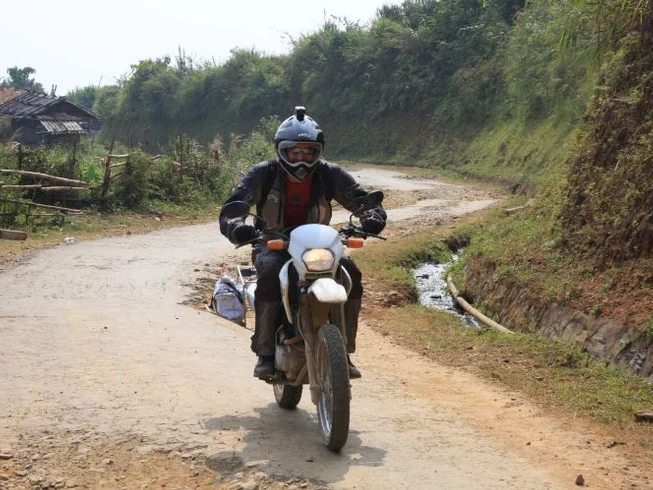
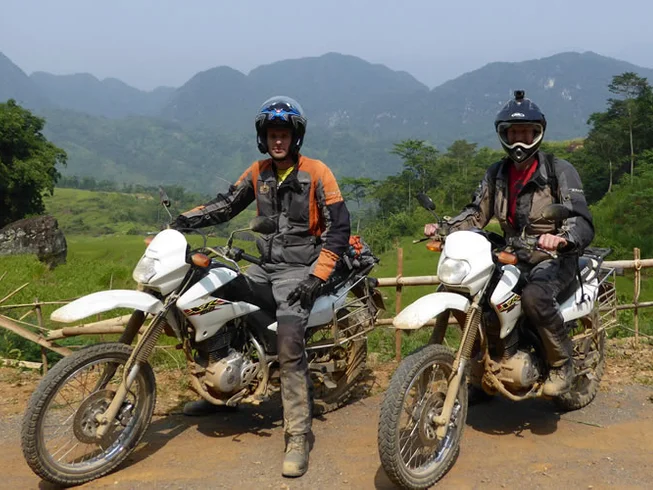
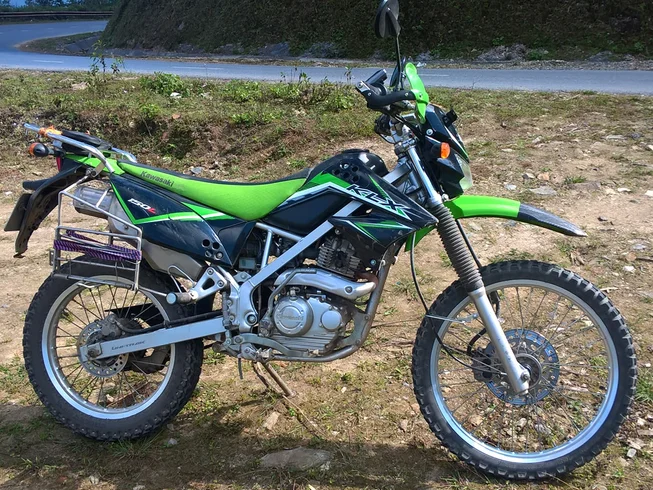
- Rental bike (Kawasaki KLX 150cc or Honda XR 150cc or CRF 150 cc), motorbike upgrade: Honda XR250cc
- Mileage
- 2,680 kilometers / 1,665 miles
- Daily rides
- 50 - 310 kilometers / 31 - 193 miles
- Riding gear
- Not included but mandatory: Helmet, motorcycle jacket with protection, gloves, a good sturdy pair of (motorcycle) trousers with protection, and sturdy high (mountain) boots
- Meals
- Some breakfasts
What's included
- 18 riding days and 3 rest days
- Boat trip on Lake Ba Be
- 20 nights accommodation
- Some breakfasts
- All airport transfers
- Dong Van permit
- Motorcycle rental from days 3 to 20
- Support car with a local driver
- Mechanic traveling in the support car
- Multilingual tour guide on the motorcycle
- Extensive travel manual
Not included
- Gasoline engines
- Other meals and drinks
- Personal expenses
- Boat trip in Ha Long Bay
- Travel and cancellation insurance
- Visa costs
- Flights
- Extensions (265 USD)
- Pocket money (400 USD)
- Upgrade to Honda XR250 (500 USD)
Accommodation
During this tour, you will stay in a mix of accommodations from semi-luxurious to simple homestays.
Food
During this tour, you will have some breakfasts included in the prices at a few of the hotels you stay at. Other meals and drinks are at your own expense.
Getting There
The journey starts in the beautiful Hoi An which lies along the river. You will go to the vibrant and colorful market and pass through traditional streets where you will see historical buildings with Chinese influences and Chinese Shrines. You start with a visit to the historical Hindu site of My Son. You take a walk through the Forbidden Purple City in Hue and visit the tunnel complex in Vinh Moc